This project was about making something useful, but also learning how real products are made. I designed and built a two-piece screwdriver handle that could be injection molded. I wanted it to feel good in the hand, and be a neat momento from my time at Cal Poly. The idea was simple—take a basic tool and go through the full process to make it manufacturable. That meant thinking about draft angles, parting lines, core-cavity separation... all things real products deal with. It wasn’t just a design exercise—it was about making something that could actually come out of a mold and be used.
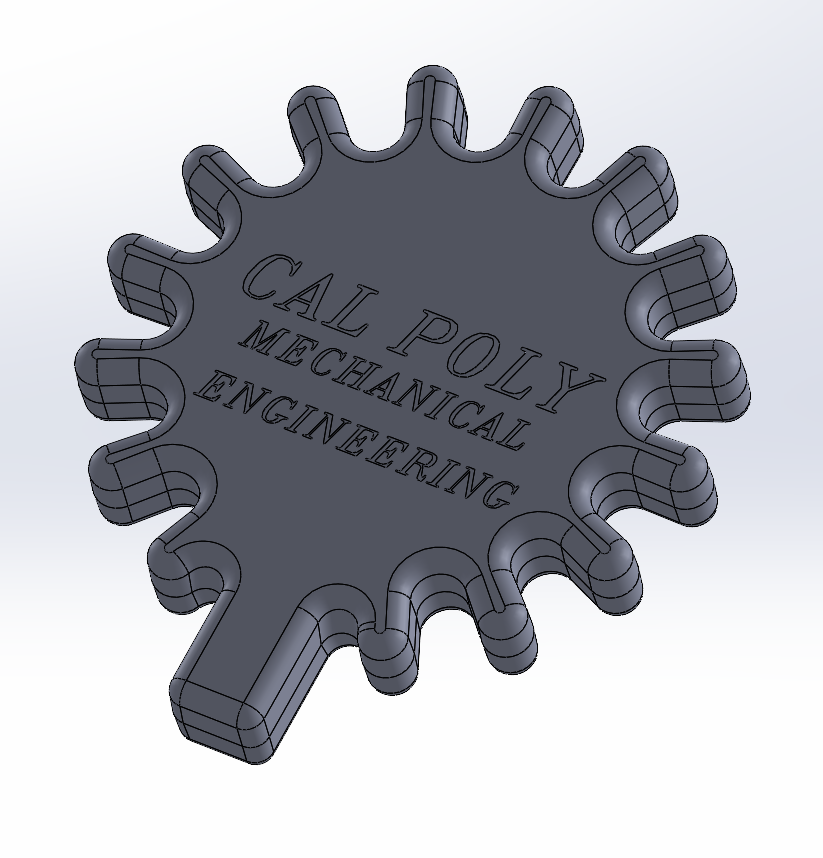
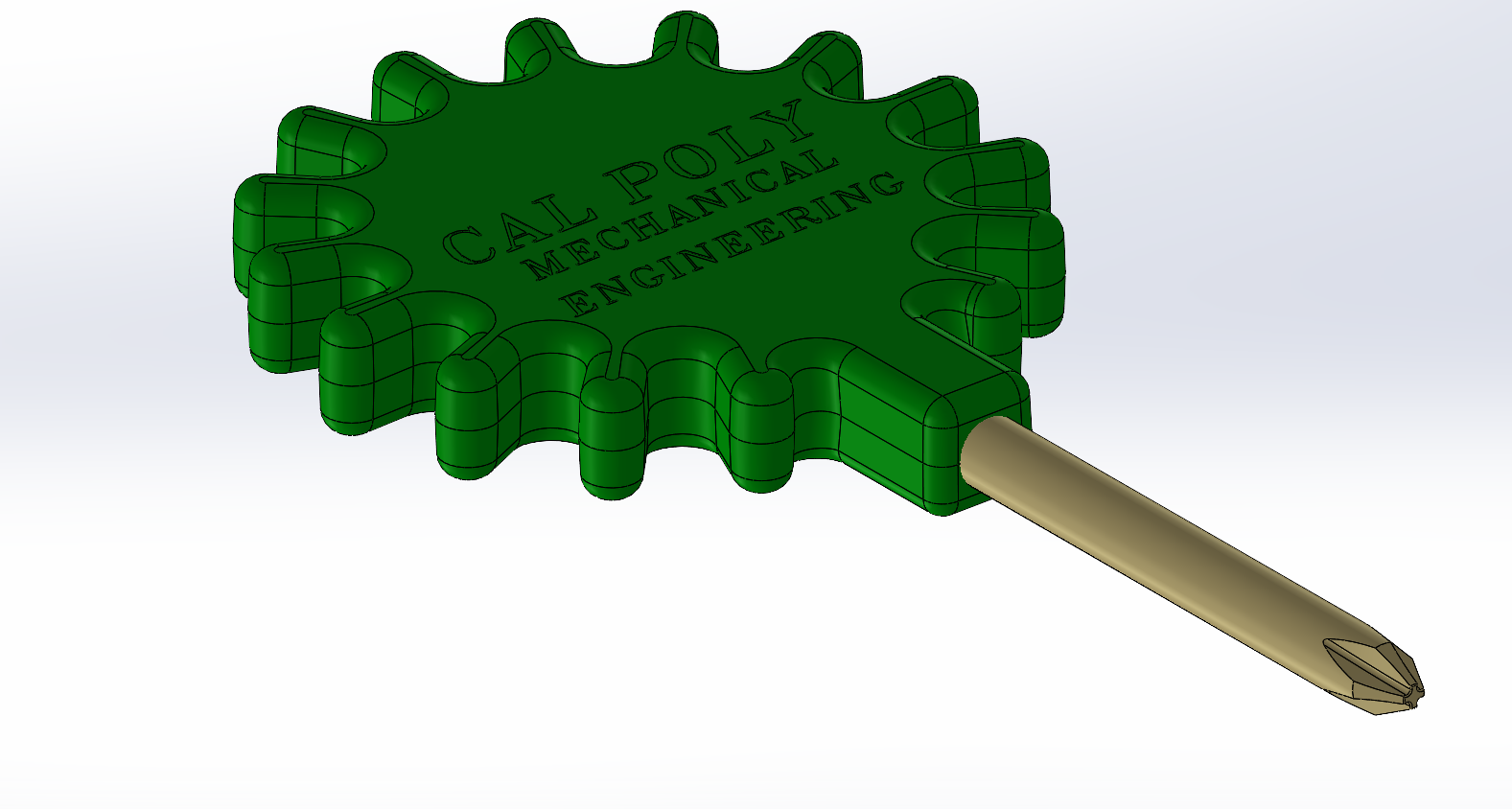
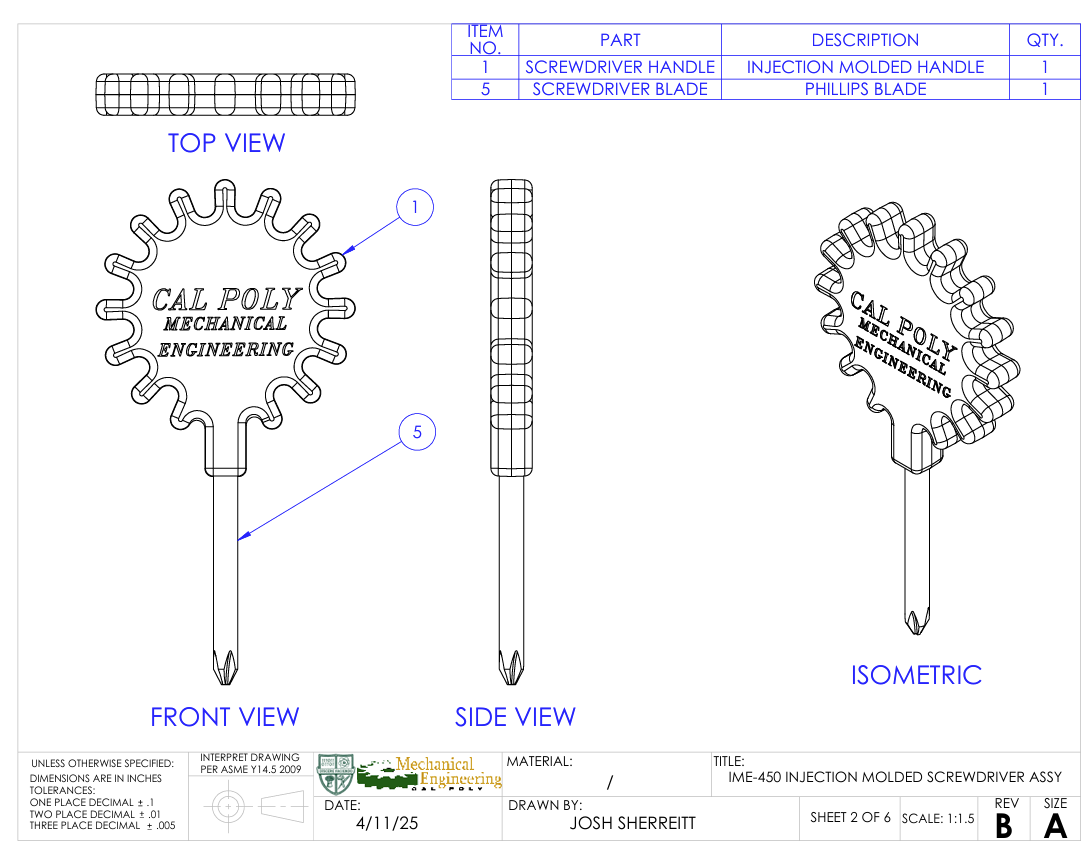
Above: Screenshots of my CAD Model for the injection molded handle + the screwdriver blade in SolidWorks for this project.
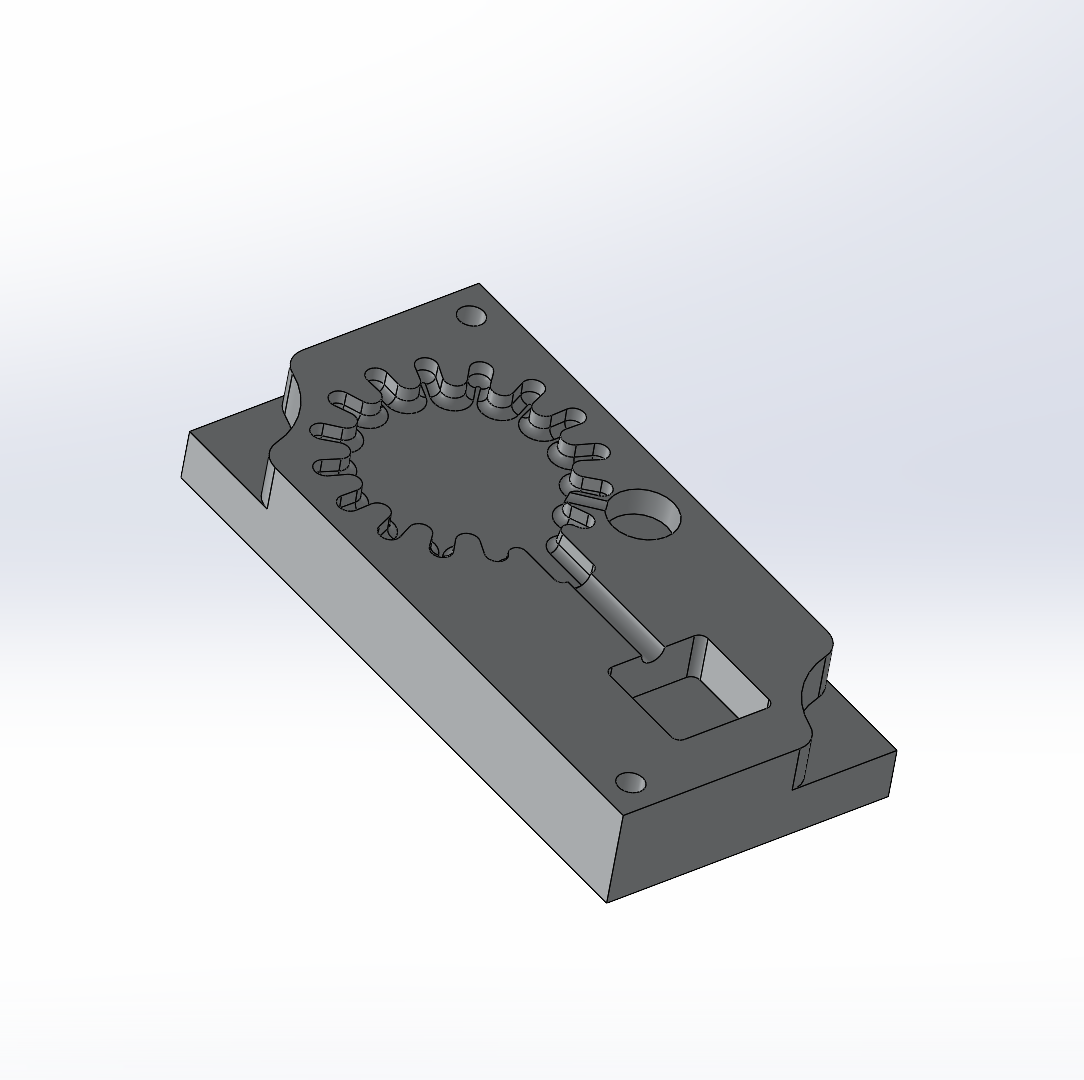
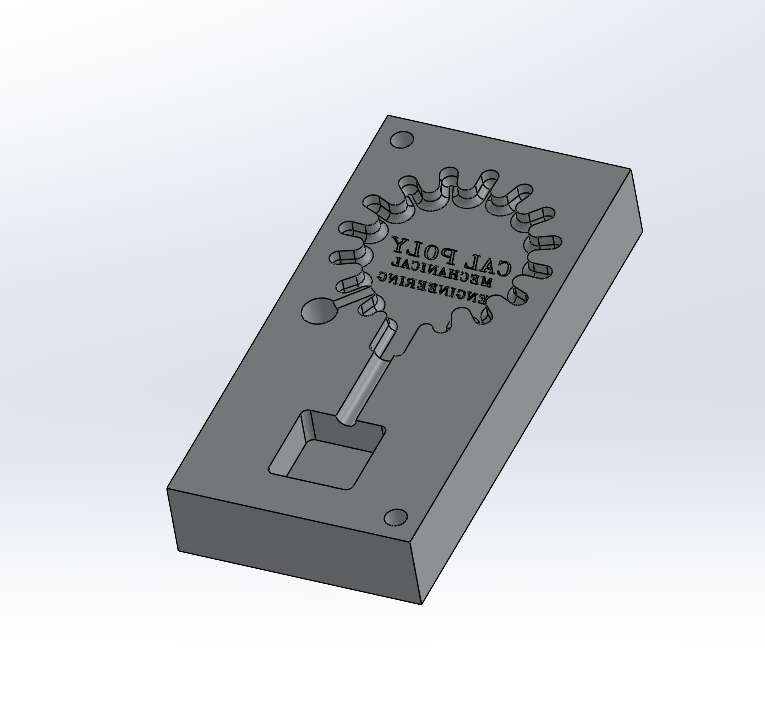
Below: Screenshots of my CAD models for my injection molded handle molds, Top (right) and Bottom (left).
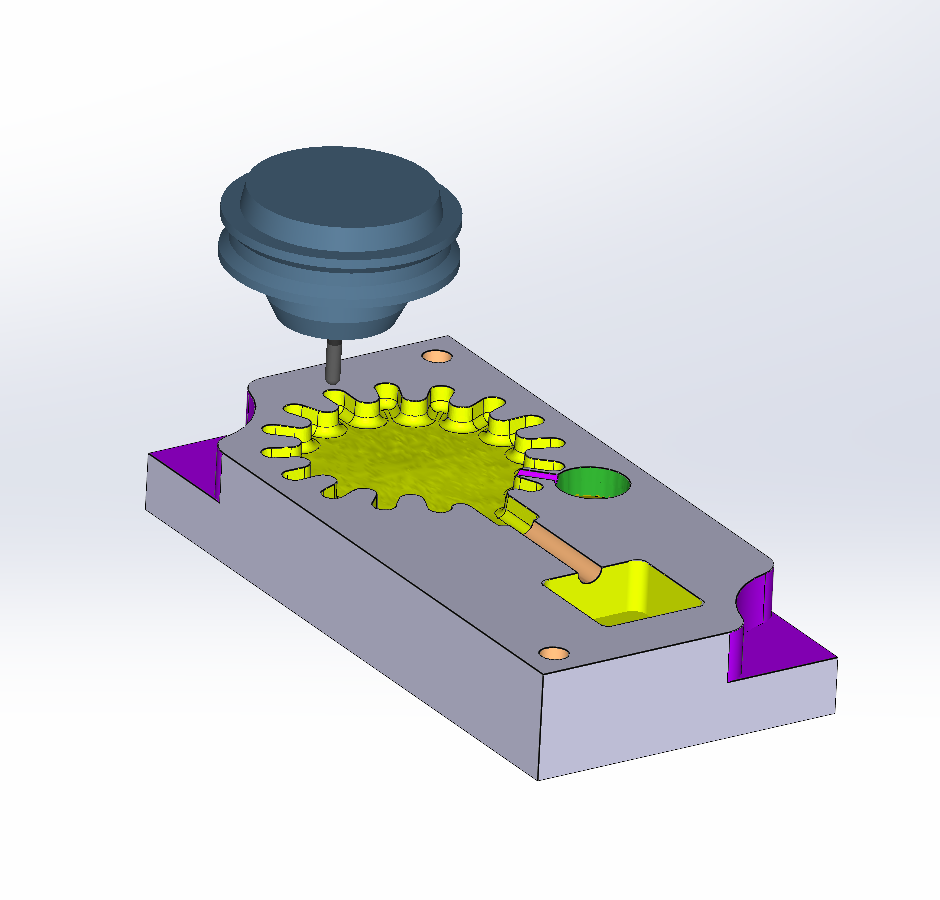
Below: A screen recording of the HSM (SolidWorks CAM Add-In) and a screenshot of the simulated toolpaths for CNC G-Code processing of the bottom mold.
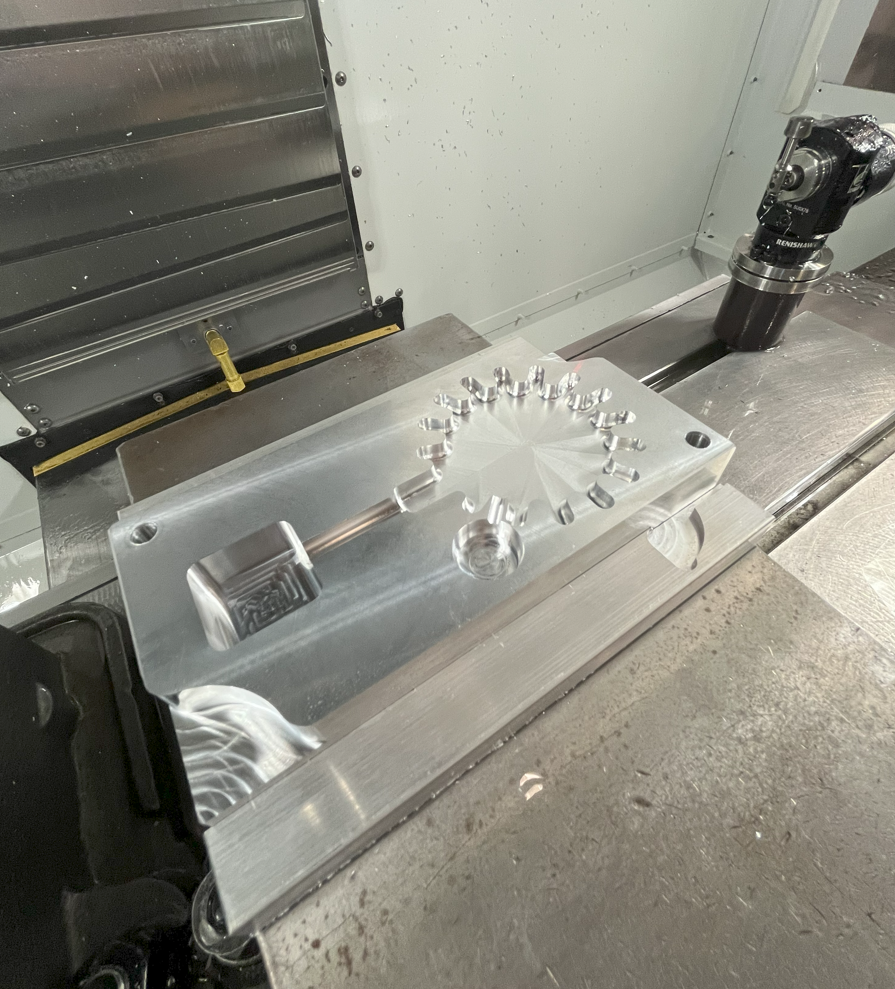
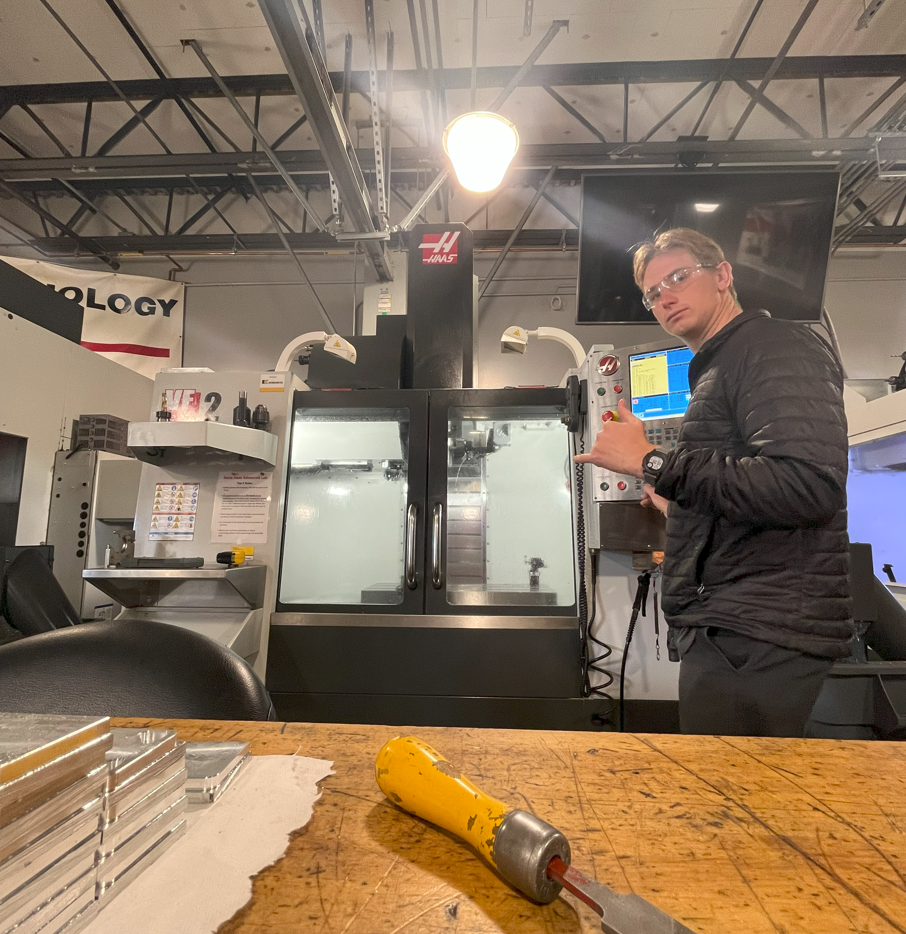
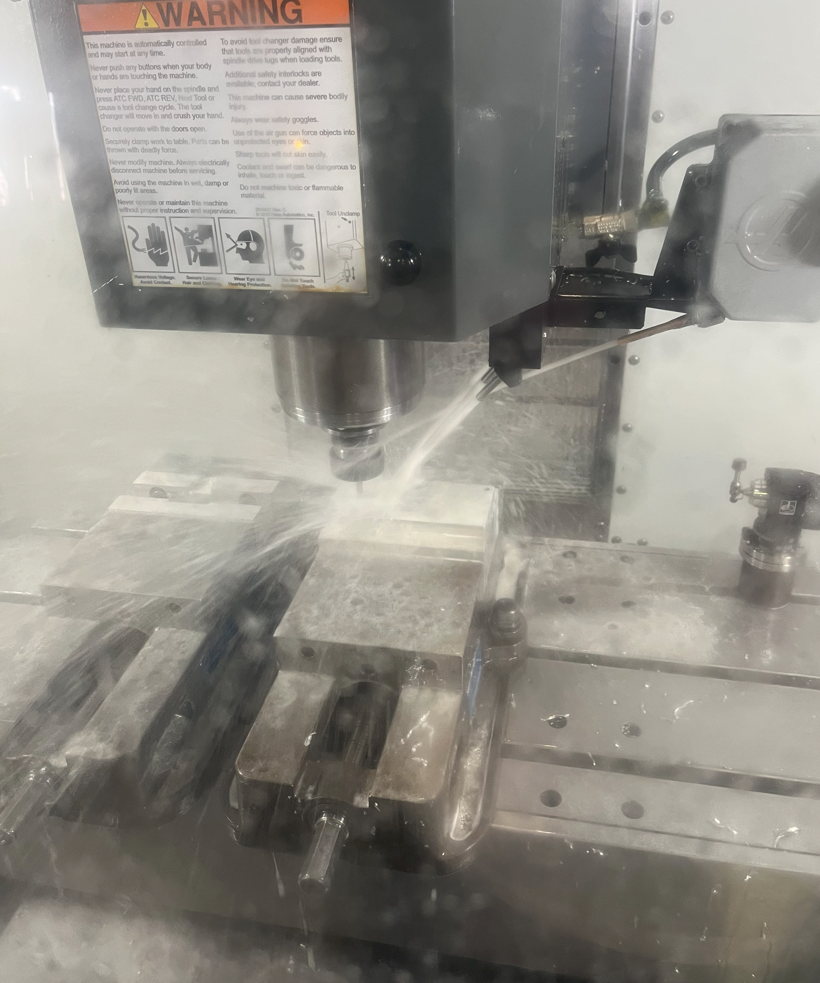
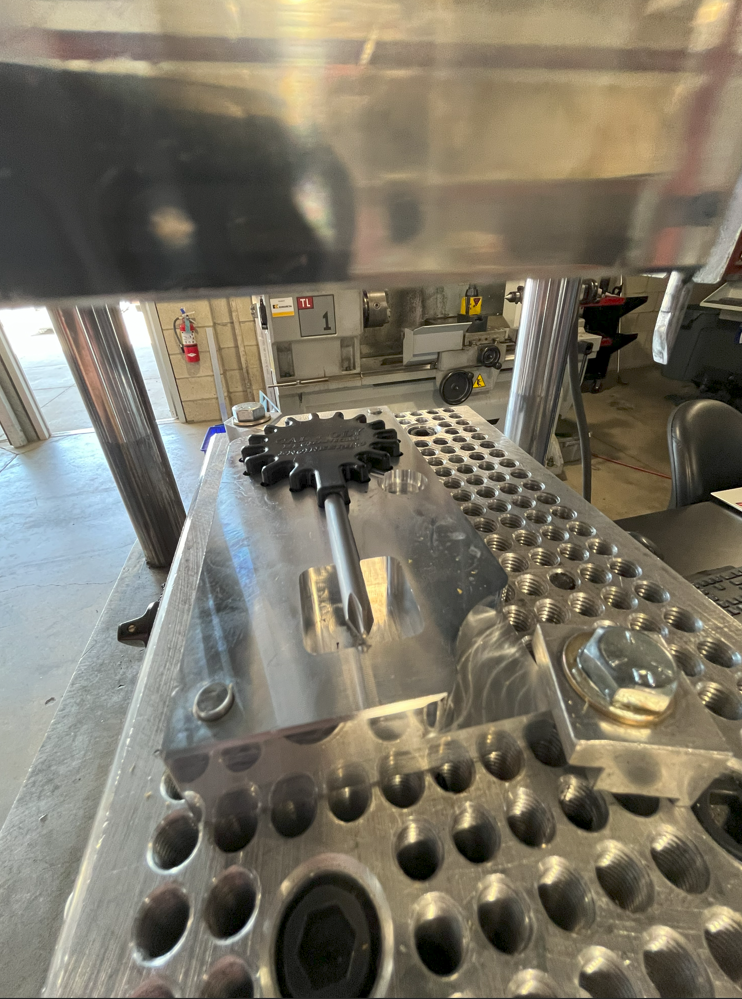
Below: CNC Machining on a HAAS VF-2 Mill an M98 P100 G-code (probe) to determine Work Coordinate System (G-54).
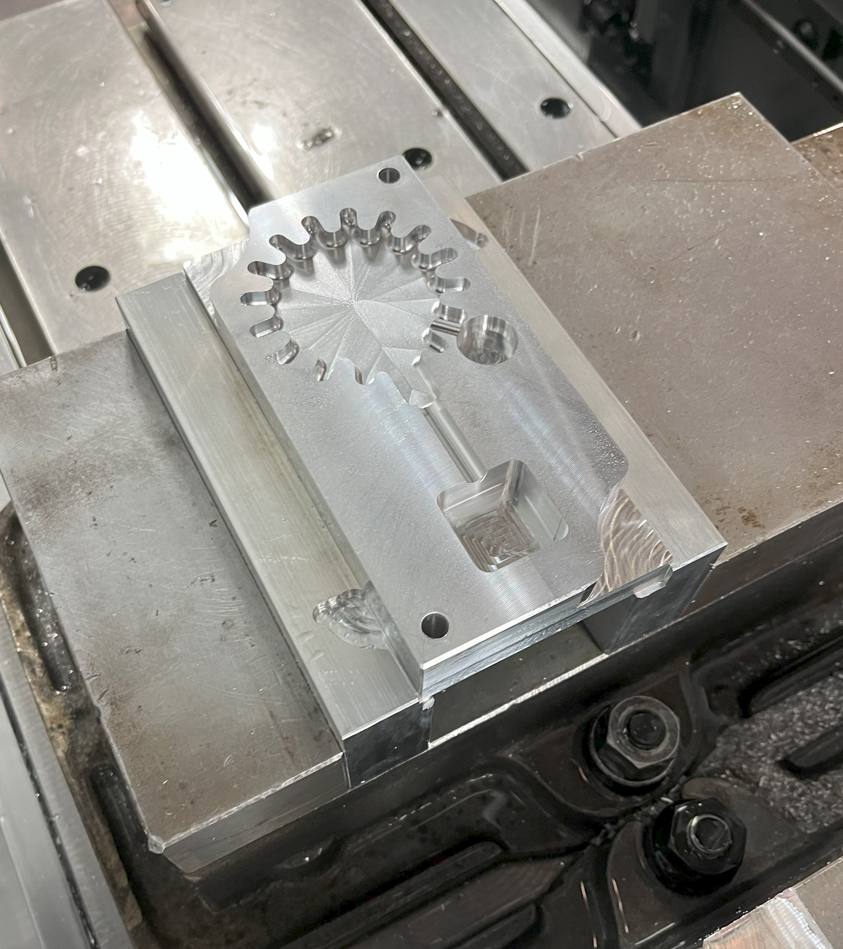
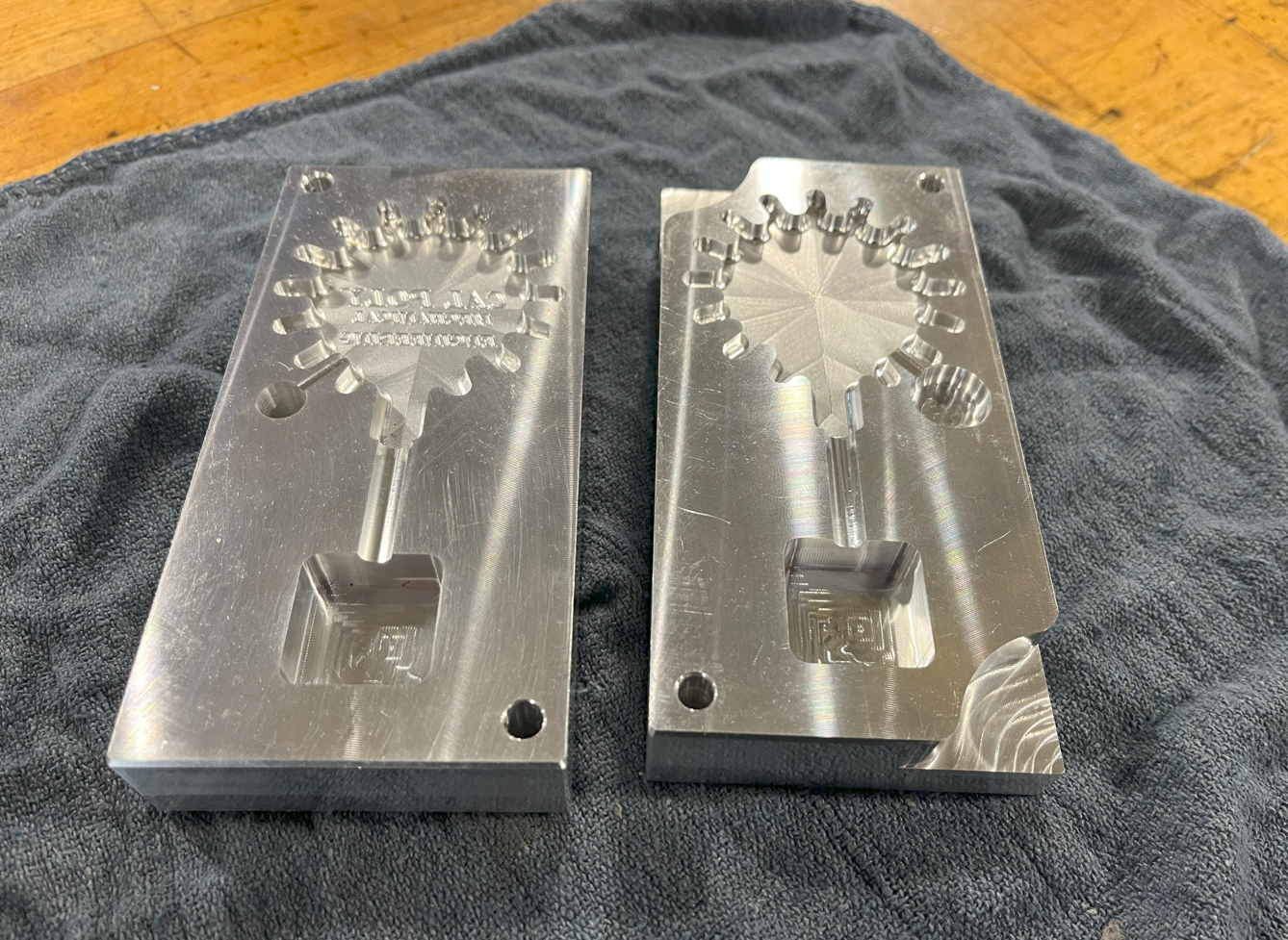
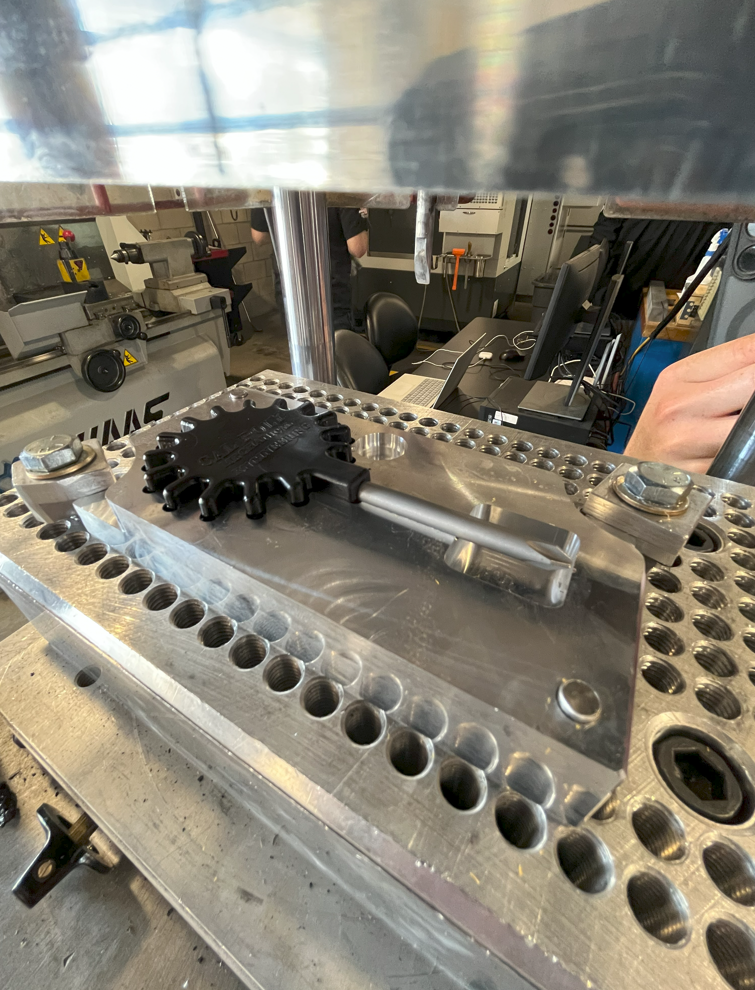
Below: The finished product!
What I learned from this project:
This project taught me what it really means to design for manufacturability (DFM). I learned how to think about a part not just as geometry, but as something that has to come out of a mold cleanly. I had to consider draft angles, shrinkage, and how to separate a part into core and cavity. I also gained experience with mold design—figuring out parting lines, runner layout, and ejection. I learned some of the Mold features in SolidWorks too--and how to properly apply them. Creating full engineering drawings helped me get more comfortable with tolerancing and proper dimensioning. On the CNC side, I learned how to plan toolpaths around features that match the injection molding process. Overall, this was my first time fully owning a product from concept to mold design, and it showed me how much detail goes into real-world manufacturing.